In 2026, growth doesn't go to the brands that spend the most — it goes to the ones who learn the fastest. Here's how to build faster learning loops about your ideal clients so your marketing, sales, and growth all become more aligned.
Why isn't more spending driving more growth in 2026?
One of the biggest myths in marketing is that growth belongs to whoever spends the most. More ad spend. More channels. More campaigns. More content.
But in 2026, the brands pulling ahead are not always the ones spending more. They are the ones learning faster — learning about their ideal clients, their market, and what is actually driving decisions.
Gartner's 2026 marketing trends point to organizations that move faster, spend smarter, and adapt more intentionally. Growth is increasingly being driven by how quickly teams can learn what the market is telling them.
And here is why that matters: when you are not learning, you are guessing. Guessing leads to:
Wasted spend
Misaligned messaging
Longer sales cycles
Missed opportunities to connect with the right buyers
The organizations learning faster are not just optimizing marketing. They are making better business decisions across the board — and our client stories show exactly what that shift looks like in practice.
What does "learning faster" actually mean?
This is not about reacting to every trend. It is about learning what your ideal buyers actually want and need — and how they are consuming information, making decisions, and choosing partners.
It means building systems to learn from:
Campaign performance
Sales conversations
Client objections
Search behavior
Engagement trends
Website user behavior
AI search visibility
Audience feedback
The organizations winning right now are asking two simple questions: What is the market and our ideal clients telling us? And more importantly: What are we going to do about it?
Why does insight beat activity every time?
More activity does not always create more momentum. But learning and then implementing those lessons does.
Because activity without insight leads to more of the same. Insight leads to better decisions.
For example:
If a blog topic consistently drives discovery calls, that tells you something.
If a certain message resonates in sales conversations, that matters.
If ideal clients engage more heavily on one channel, that is insight.
If buyers consistently ask the same questions before moving forward, that is direction.
Growth comes from turning those signals into a strategy — and then into an execution plan you can act on.
How do you build faster learning loops in your business?
Here are four practical places to start.
1. Track what actually moves conversations
Don't just track vanity metrics. Look at what actually connects to growth:
Discovery calls
Inbound inquiries
Conversion quality
Questions buyers ask repeatedly
The channels where your ideal clients engage most frequently
Those are the signals that tell you what is working and what is not.
2. Align sales and marketing feedback
Your sales conversations are one of your best sources of market intelligence. Pay attention to:
What buyers are asking
What characteristics your ideal clients have in common
What objections keep surfacing
What language they use to describe their challenges
What feedback you hear after they become a client
When marketing and sales share these insights, your messaging becomes sharper and your marketing becomes more effective. This is one of the core reasons our clients turn to B2B sales and marketing consulting from RB Consulting — the alignment changes everything.
3. Test message variations
Small shifts in language can create meaningful changes in response.
Test things like: headlines, value propositions, calls to action, audience-specific messaging, and tone and positioning.
For example, shifting from:
Schedule Now → Here if you want to talk
Buy Now → Ready when you are
Apply Now → Your next chapter awaits
Improve efficiency → Give your team time back to focus on what matters
For business owners → For growth-stage businesses navigating what's next
Need better reporting? → Trying to make decisions without clear insight?
These small changes can make your brand feel more human, more approachable, and more aligned with how people actually make decisions.
4. Create a rhythm for learning, not just doing
This is where many teams get stuck. They are always executing, but rarely stepping back to ask:
What did we learn this month?
What worked better than expected?
What didn't land?
What should we do differently next?
Even a simple monthly or quarterly review can dramatically improve how quickly your organization learns and adapts. Because growth doesn't just come from doing more. It comes from doing better based on what you've learned.
"When you understand what your market is telling you, you stop guessing. And when you stop guessing, your marketing, sales, and growth all become more aligned."
— RB Consulting
What is the bottom line for 2026 growth?
Growth in 2026 is not about doing more. It is about learning faster and making more informed decisions.
The brands pulling ahead are the ones listening closely to their buyers, identifying patterns, and turning those insights into clearer messaging, stronger engagement, and more confident sales conversations.
When you understand what your market is telling you, you stop guessing. And when you stop guessing, your marketing, sales, and growth all become more aligned. That is what makes selling easier.
Want a partner who builds those learning loops with you? Connect with the RB Consulting team and let's build a growth system that works as hard as you do.
Frequently Asked Questions
What does it mean to "know your ideal client" in B2B marketing?
Knowing your ideal client means understanding more than demographics or firmographics. It means understanding their challenges, decision-making process, the language they use, the questions they ask before buying, and the channels they trust. The deeper that understanding, the sharper your messaging and the shorter your sales cycle.
Why is "learning faster" the new growth advantage in 2026?
Gartner's 2026 marketing trends show that organizations winning today are not the biggest spenders — they are the fastest learners. As AI levels the playing field on content production, the brands that quickly translate market signals into smarter decisions outpace competitors who simply produce more.
What are the best signals to track to learn faster?
Focus on signals tied to revenue and relationships: discovery call topics, inbound inquiry quality, repeat buyer questions, sales objections, channel engagement, and the language clients use to describe their challenges. These outperform vanity metrics like impressions or follower counts.
How often should we review what we've learned?
A simple monthly tactical review combined with a quarterly strategic review is enough for most growth-stage businesses. The goal is to step out of execution mode long enough to ask: what worked, what didn't, and what should we do differently next?
How do small message changes improve conversions?
Language shapes how buyers feel about your brand. Swapping "Buy Now" for "Ready when you are" or "Improve efficiency" for "Give your team time back" makes your messaging feel more human and aligned with how people actually make decisions — which lifts engagement and response rates.
How do sales and marketing alignment fit into learning faster?
Sales conversations are one of the richest sources of market intelligence in your business. When sales and marketing share what they hear — objections, repeat questions, client language — marketing becomes sharper and sales becomes easier. Alignment is the multiplier that turns insight into growth.
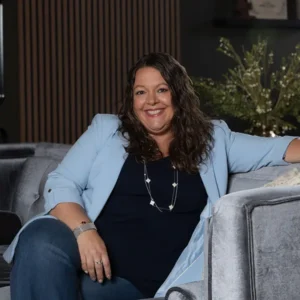
Rebecca Bormann
About the Author
Rebecca Bormann is the Founder and CEO of RB Consulting Agency, a strategic marketing and business development firm that empowers organizations to clarify their brand, elevate visibility, and accelerate growth.
With over 20 years of leadership experience in sales and marketing, Rebecca blends emotional intelligence with data-driven strategy to help clients connect authentically with their audiences, align marketing and business objectives, and build sustainable pipelines for growth.
Under her leadership, RB Consulting serves clients across Indiana and nationwide in sectors including technology, professional services, healthcare, education, retail, and nonprofit. Guided by its core philosophy—People First. Strategy Always. Success Together.—the agency is recognized for its people-centered, data-informed approach that transforms brand presence into measurable business results.
Rebecca’s leadership and impact have earned numerous honors, including 2025 NAWBO Women Business Owner of the Year, Indianapolis Business Journal’s Women of Influence (2022), Hope Magazine’s Hope 25 Honoree (2022), AOTMP® Insights Women in Tech DEI Advocate (2022), and Junior Achievement’s Indy’s Best & Brightest Finalist (2020, 2021).
She holds Executive Education Certificates in Business Strategy, Financial Management, and Marketing & Sales from Indiana University’s Kelley School of Business, along with a Bachelor’s Degree in Management and a Certificate in Communications from Indiana Wesleyan University.
RB Consulting Agency is certified as both a Women Business Enterprise (CWBE) by NAWBO and a Women-Owned Business (WBE) by the Indiana Department of Administration.